
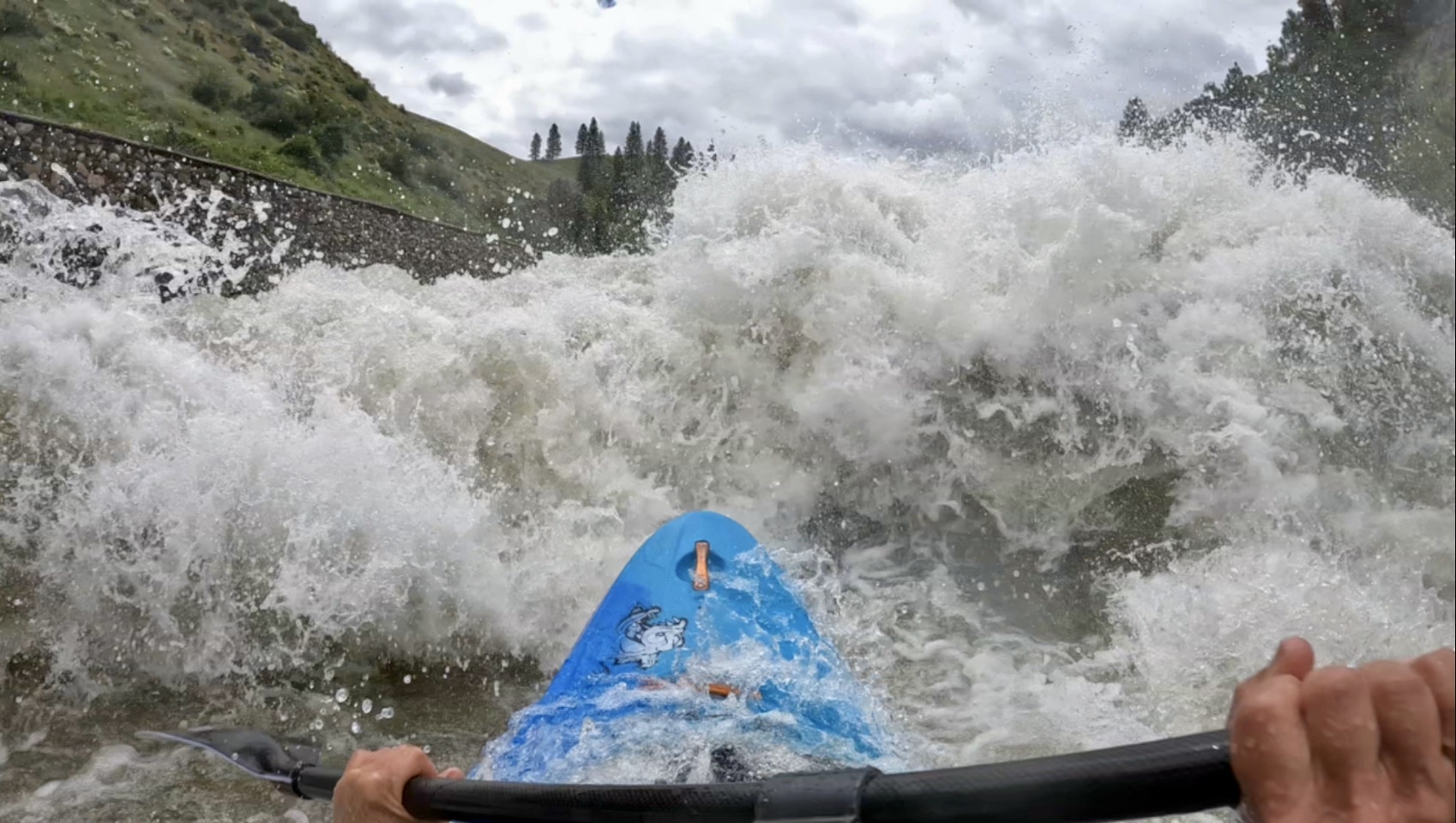
A big water year could be coming
Paddlers all over California are watching the forecast this fall. In its October update, NOAA’s Climate Prediction Center said El Niño is still strengthening, with a strong to very strong event likely through early spring 2027. There’s even a good chance it becomes the strongest El Niño on record.
Nothing is guaranteed, but strong El Niño winters often bring big storms to California. For paddlers, that can mean high water, longer seasons, and runs that only come in once every few years.
And it’s not just California. In Chile, where I spend nearly half the year, the Andes had a huge snow year. By late July, snow depth across the central monitoring sites was about 51% above the historical average, and some resorts were reporting more than 4 meters of snow by September. The same storms brought serious flooding, where successive fronts pushed rivers over their banks. All that snow will be melting into the rivers through the Southern Hemisphere summer. Wherever you paddle, if you’re looking at a big water season, the same rules apply.
That’s exciting. It also means a lot of us will be making paddling plans, looking at a new river, scouting at a rapid that doesn’t look like it did last year, asking the same question: should I run it?
What changes when the water comes up
A run you know at summer flows can be a completely different river at high water. Before you put on, it’s worth knowing what’s different:
- Everything happens faster. There’s less time to set up for a move and less time to recover if you miss it.
- Eddies shrink or disappear. The places you normally regroup or scout from may be gone, or turn boily and hard to hold.
- Holes get bigger and swims get longer. A flip that’s a quick roll at low water can turn into a long swim, with gear going downstream and your crew chasing it.
- The water is colder. Rain and snowmelt keep flows high and temperatures low, so cold water gear matters more.
- Wood moves. Big storms shift logs and create new strainers, even on rivers you paddle every week. Scout or get current beta.
- Rapids change. After a big flood, a familiar rapid can have new rocks, new holes and new lines.
The same goes for those rare runs that only come in during big years. They’re special, but there’s often less recent beta, unknown wood, and fewer people who’ve seen them at that level.
Should I run it? My mental flowchart
Once you peel out of that eddy, you’re committed. And unlike falling off a bike or skis, a mistake on the river doesn’t end the ride. If you swim, now there’s a swimmer and gear moving downstream, and your whole crew has to manage it. That’s why I run through the same questions every time, in the same order.
- Do I have the skills for this? This is the most objective question, and the most important one. Can I make the moves and read the water? Just as important, can I recover if I miss: a good brace, a solid roll, a cool head, the skills to surf out of a hole? At high water, be extra honest, because there’s less room for plan B. If the answer is no, the flowchart ends here. I walk it.
- How am I paddling today? Have I been hitting my lines with confidence, or beatering down the river? Have I already swum, or rolled a few times? These questions are pretty objective – it’s an honest read on how I am paddling that day. If I’m missing lines in the easier rapids, it’s not a good day to paddle a more challenging or consequential rapid. Also worth asking myself things like: did I sleep badly, or is my head just not in the game? These are more subjective, but they’re real. I’ve walked rapids I’ve run many times before because I just wasn’t paddling at 100% that day.
- Can my crew get me out of trouble? I might have the skills to run it, but if I’m not confident my team can pull off a rescue at this flow, I’ll walk. Things happen to the best paddlers. Practice rescue scenarios with your core crew on your home river, and keep your swiftwater rescue training current.
- What about the butterflies? You can tick every box, scout the line, have a solid team, and still feel scared standing above it. That’s normal. It’s easy to say “I got this” from your couch or watching a video. It’s different on the river bank. Everyone feels fear. What matters is how you manage it so your decisions stay level.
There’s no magic trick for the nerves, but you can practice managing them the same way you practice your strokes. Work Class III moves on Class II water, or Class V moves on Class III, so you build skills while the consequences stay low. Paddle into a feature that’s intimidating but safe. Lead on a run you know instead of following. Then when you’re standing above the big one, you’ve already had practice with the fear and the moves.
And walking is always a good option. I’d rather portage, then think to myself at the bottom, “I could have done that,” rather than not being 100% confident and it ending up badly. The river will be there tomorrow.
Get ready before the water comes
The best time to prepare for a big water season is before it starts. A few ways to get ready:
- Brush up on rescue skills. Our Practical Safety & Rescue Workshop on the South Fork covers the skills your crew will count on. For a primer, read our post on river safety skills every whitewater paddler should know.
- Get in some coached river time. One-on-one coaching, small group private instruction, and our whitewater kayaking clinics are a great way to shake off the winter and build confidence before you step up.
- Ready for the next level? The 2027 Whitewater Roadshow is built for paddlers stepping up to Class IV.
- Track the flows. Check gauges before every trip and watch how fast they’re rising, not just the number. Dreamflows or American Whitewater are both great resources.
I first wrote about this mental flowchart for Paddling Life back in 2022, and I still use it every time I’m standing on the boulder.
Keep paddling, keep practicing, and most of all, keep having fun out there.