The river is one of the most dynamic environments you’ll ever paddle in. Water levels change, weather shifts, lines get misread, and swimmers happen — even to experienced paddlers. The difference between a close call and a serious incident is almost always preparation. Knowing your river safety skills before you need them is one of the most important investments you can make as a paddler.
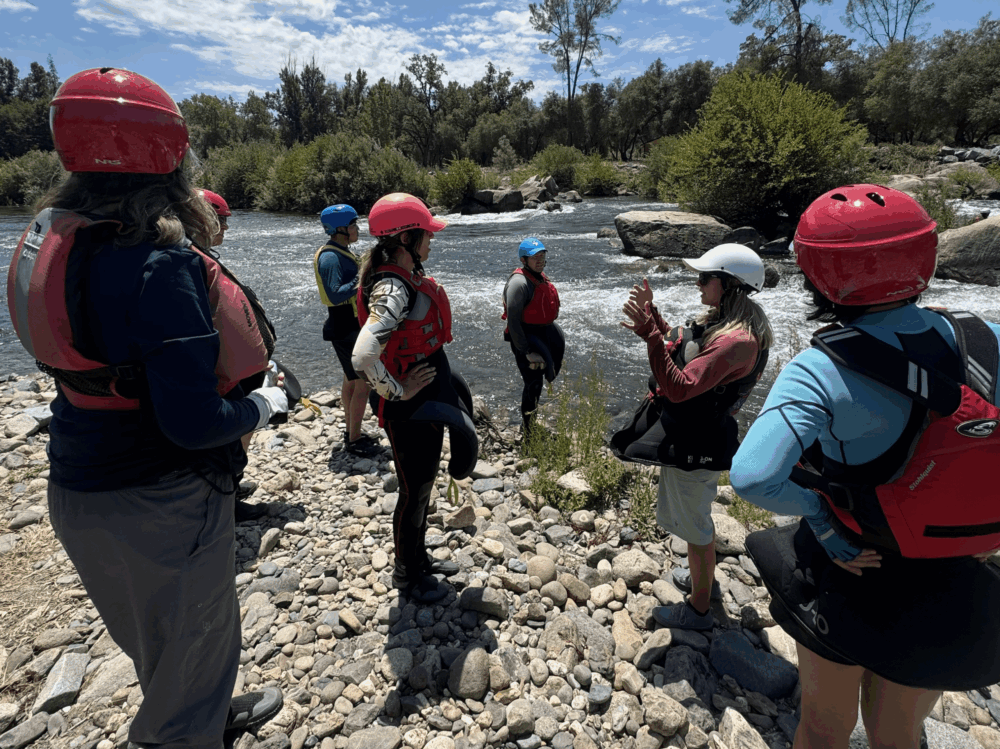
At CWC we build safety and rescue skills into everything we teach. And twice a season we run dedicated workshops on the South Fork American River specifically designed to take your preparedness to the next level — whether you’re a recreational paddler who wants to be ready for anything, or an experienced paddler preparing to lead trips for others.
Here’s what every paddler should know — and how to practice it.
The fundamentals of whitewater safety
Swimming in whitewater
Every paddler flips. Knowing how to swim effectively in moving water — on your back, feet downstream, reading the current — is the single most important safety skill you can have. It sounds simple but doing it calmly and correctly under pressure takes practice. This is the foundation everything else builds on.
Wet exits and self-rescue
Getting out of your boat in a difficult spot — in current, against a bank, in aerated water — requires practiced technique. A panicked wet exit is very different from a controlled one. The goal is to make self-rescue automatic so that when you need it, your body knows what to do without your brain having to think through it.
Throw bags
A throw bag is the most important piece of rescue gear on the river — and most paddlers who carry one have never practiced using it. Deploying a throw bag accurately to a swimmer in current, from a bank or a boat, is a skill that deteriorates without practice. Our Safety & Rescue Workshop includes real throw bag scenarios so you leave knowing exactly how to use yours when it counts.
Tow tethers and towing a swimmer
When a swimmer can’t reach the bank and can’t self-rescue, a tow tether can be the difference between a manageable situation and a serious one. Knowing how to safely tow a swimmer — and when to use a tether vs. a throw bag — is an intermediate rescue skill that every paddler who goes out with a group should have.
Scouting and decision making
Safety isn’t just physical — it’s cognitive. Knowing when to scout a rapid, how to read what you’re looking at, and when to make the call to portage rather than run is a judgment skill that develops over time. Our workshops spend real time on river reading and decision making under pressure — not just the physical rescue techniques.
When you’re ready to lead
Once you’ve built solid safety skills for yourself, the next level is learning to keep others safe. Leading a group on the river — whether you’re organizing trips with friends, coaching a community program, or moving toward professional guiding — requires a different and deeper skill set.
CWC’s Trip Leading, Logistical Planning & Group Dynamics workshop is new for 2026 and covers exactly that. It’s a full day course on the South Fork American River for paddlers who are ready to step into a leadership role on the water.
What trip leading actually involves:
Planning a river trip sounds straightforward until you’re doing it. Effective trip leadership means screening participants for skill level and physical ability, designing logistics around put-ins, take-outs, shuttles, and contingency routes, establishing communication protocols — hand signals, buddy teams, emergency contacts — and managing group dynamics in real time on the water.
It also means making hard calls. Turnaround decisions when conditions change. Managing a mixed-skill group on a river with consequences. Supporting first-time or underserved participants while keeping the whole group moving safely. These are skills that develop through practice and structured feedback — which is exactly what the workshop provides.
Leadership beyond the river
One of the things we find consistently in our Trip Leading workshop is that the skills transfer. Decision making under pressure, communication in dynamic environments, managing diverse groups with competing needs — these are leadership skills that show up everywhere. Paddlers who go through this workshop often report using what they learned at work, in their communities, and in other outdoor pursuits.
The two workshops — side by side
Practical Safety & Rescue Skills Workshop Who it’s for: Recreational paddlers of all levels who want to be prepared for the unexpected. What you’ll practice: Swimming in whitewater, wet exits, throw bags, tow tethers, towing a swimmer, scouting, decision making. Duration: 1 day. Location: South Fork American River, Lotus CA
Trip Leading, Logistical Planning & Group Dynamics Who it’s for: Experienced paddlers ready to lead day trips and multi-day expeditions for others. What you’ll cover: Full expedition planning, participant screening, group dynamics, communication protocols, on-water leadership, stewardship ethics. Duration: 1 day. Location: South Fork American River, Lotus CA
Both workshops are open to whitewater kayakers and packrafters at Class II-IV skill levels. Private workshops can also be arranged for groups — contact us at info@cwwcollective.com to discuss.
The bottom line
Safety skills aren’t just for guides and instructors. They’re for anyone who paddles with other people — which is most of us, most of the time. Taking a dedicated day to practice these skills in a controlled, professional setting on familiar water is one of the best investments a paddler can make before a big season, a remote trip, or any time you’re planning to be on the river with people who are counting on you.
Learn more about the Safety & Rescue Workshop → Click here
Learn more about the Trip Leading Workshop →] Click here
Browse all South Fork clinics → South Fork American River