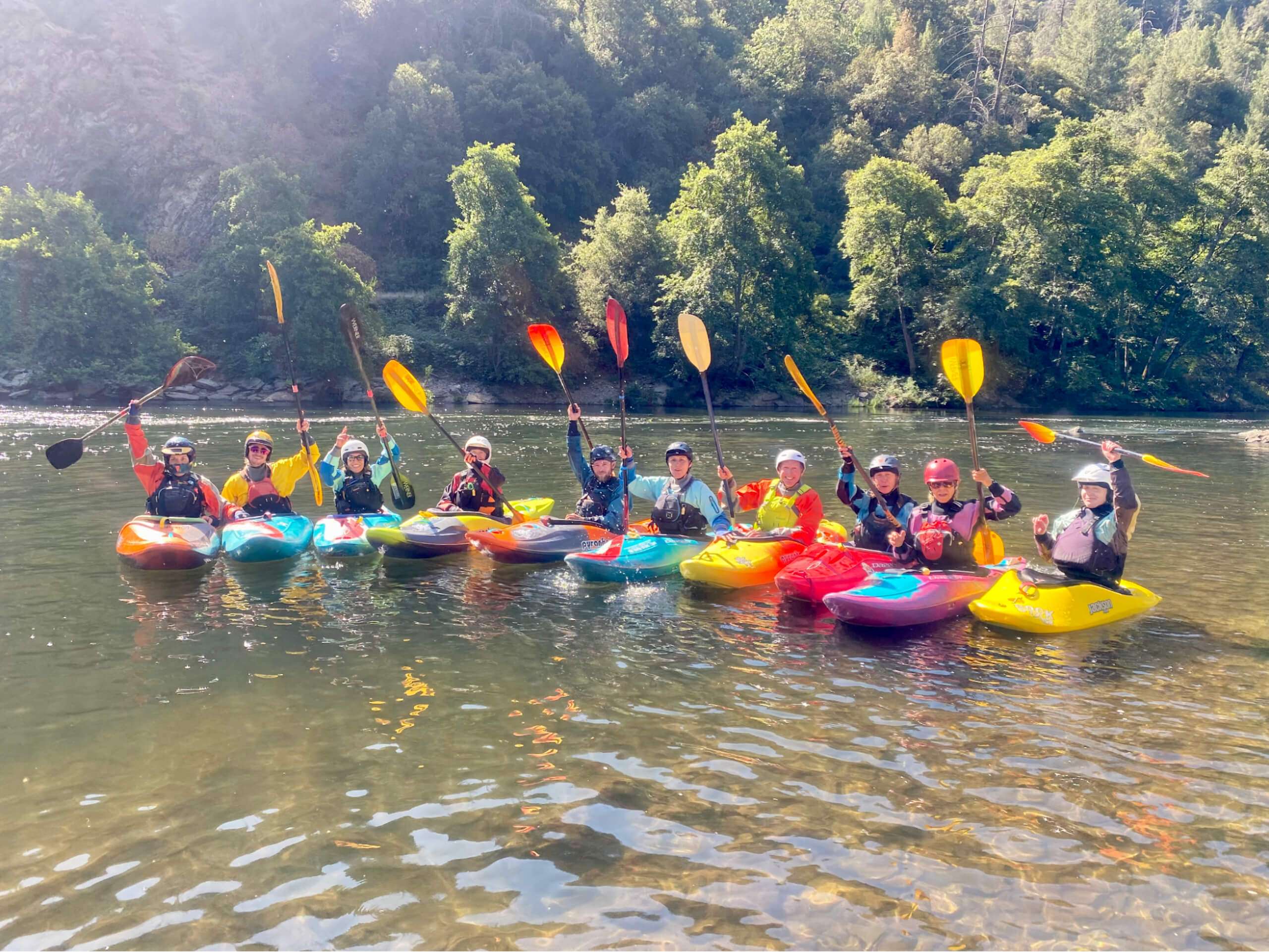
Getting started in whitewater kayaking on the South Fork American River is easier than you think — here’s everything you need to know. The South Fork American River has a way of doing something to people. You show up nervous, maybe a little unsure why you signed up for this, and by the time you’re floating in the eddy below your first rapid — grinning, soaked, already wanting to go again — something has shifted. That’s the river doing its thing.
If you’ve been thinking about learning to whitewater kayak and wondering where to start, here’s the honest guide — no fluff, just what you actually need to know.
You don’t need experience. You need curiosity.
The single biggest misconception about whitewater kayaking is that it’s only for athletic, outdoorsy, risk-tolerant people. It isn’t. The South Fork American River is a Class II-III river — which means it has real whitewater, real rapids, and a real learning curve, but also real pools between rapids where you can breathe, laugh, and process what just happened. It’s genuinely accessible for beginners and genuinely challenging for experienced paddlers. That’s a rare combination and it’s exactly what makes it such good teaching water.
At CWC we’ve taught complete beginners — people who had never sat in a kayak, had no idea what a wet exit was, and weren’t sure they were strong enough — and watched them paddle confidently through Class III water by the end of a weekend clinic. Curiosity and willingness to be a beginner are the only prerequisites.
What to expect in your first clinic
Your first day on the water will probably look something like this: you’ll meet your instructor and a small group of fellow paddlers at the river. You’ll get fitted for a kayak, paddle, helmet, and PFD — all provided. Before you get in the boat, you’ll spend time on shore learning the basics: how to hold a paddle, how to get in and out of the boat, and most importantly — how to do a wet exit, which is the controlled way to get out of your kayak if you flip.
That wet exit practice is the moment most beginners realize this is going to be okay. Once you know how to get out of the boat calmly, the fear of flipping largely disappears. After that it’s time to get on the water.
Your first strokes will be on flatwater or gentle current. You’ll work on forward stroke, turning, and basic boat control before your instructor introduces you to moving water. By the end of the day most beginners have run their first real rapid — and most of them are already asking when they can come back.
The South Fork progression
One of the things we love about the South Fork is that it grows with you. Here’s a rough map of how most paddlers progress:
First clinic — Introduction to whitewater. Wet exit, basic strokes, first Class I-II rapids. The goal is comfort and curiosity.
Second or third clinic — Building on the fundamentals. Eddy turns, peel-outs, ferries. You’re starting to read the river rather than just survive it.
Intermediate — Class II-III water with intention. Working on line selection, reading features, making decisions before the rapid rather than in it.
Advanced — Class III-IV, boofing, playing in features, trip leading. This is where paddling stops being a sport and starts being a lifestyle.
Most paddlers move through the first two stages in a single season with consistent clinic attendance. Progress accelerates significantly when you combine group clinics with private coaching.
What to bring
All paddling gear is provided — kayak, paddle, helmet, and PFD. Here’s what you bring:
- Clothes you can get completely wet in. Synthetic fabrics that dry fast are ideal. Avoid cotton.
- Water shoes or old sneakers with a back strap. No flip flops.
- Water and snacks.
- Sunscreen.
- A change of clothes and a towel for after.
- In spring, a wetsuit is recommended — we can rent you one if you don’t have one.
When to come
The South Fork season runs April through September. Spring flows (April and May) are the most dynamic — higher water, more powerful features, genuinely exciting even for experienced paddlers. If you want bigger water and more challenge, come in spring.
Summer flows are dam-regulated and consistent — reliable, warm, and excellent for learning. If you’re a first-timer who wants predictable conditions and warm water, June through August is ideal.
Ready to get on the water?
If you’ve been thinking about it, this is your sign. The South Fork is running, the season is open, and we have clinics booking now for all levels.
Browse classes and clinics → Whitewater Kayaking Clinics
Not sure which clinic is right for you? Take our skills self-assessment → Paddling Skills Self Assessment