
The Beginner’s Guide to the Sport that Changes Everything
There’s a moment that happens to almost everyone who discovers packrafting — a kind of mental unlocking where you realize that rivers you’ve hiked past, canyons you’ve looked down into, and stretches of wilderness you’ve always wanted to access just became reachable. That’s what packrafting does. It takes the best parts of hiking and kayaking, folds them into a boat that fits in your backpack, and hands you the keys to an entirely different kind of adventure.
If you’ve never heard of packrafting, you’re not alone — it’s one of the fastest growing disciplines in paddlesports and still flying under the radar for most outdoor enthusiasts. If you’re a hiker, backpacker, kayaker, or adventure racer wondering whether it’s right for you, this guide is your starting point.
What is packrafting?
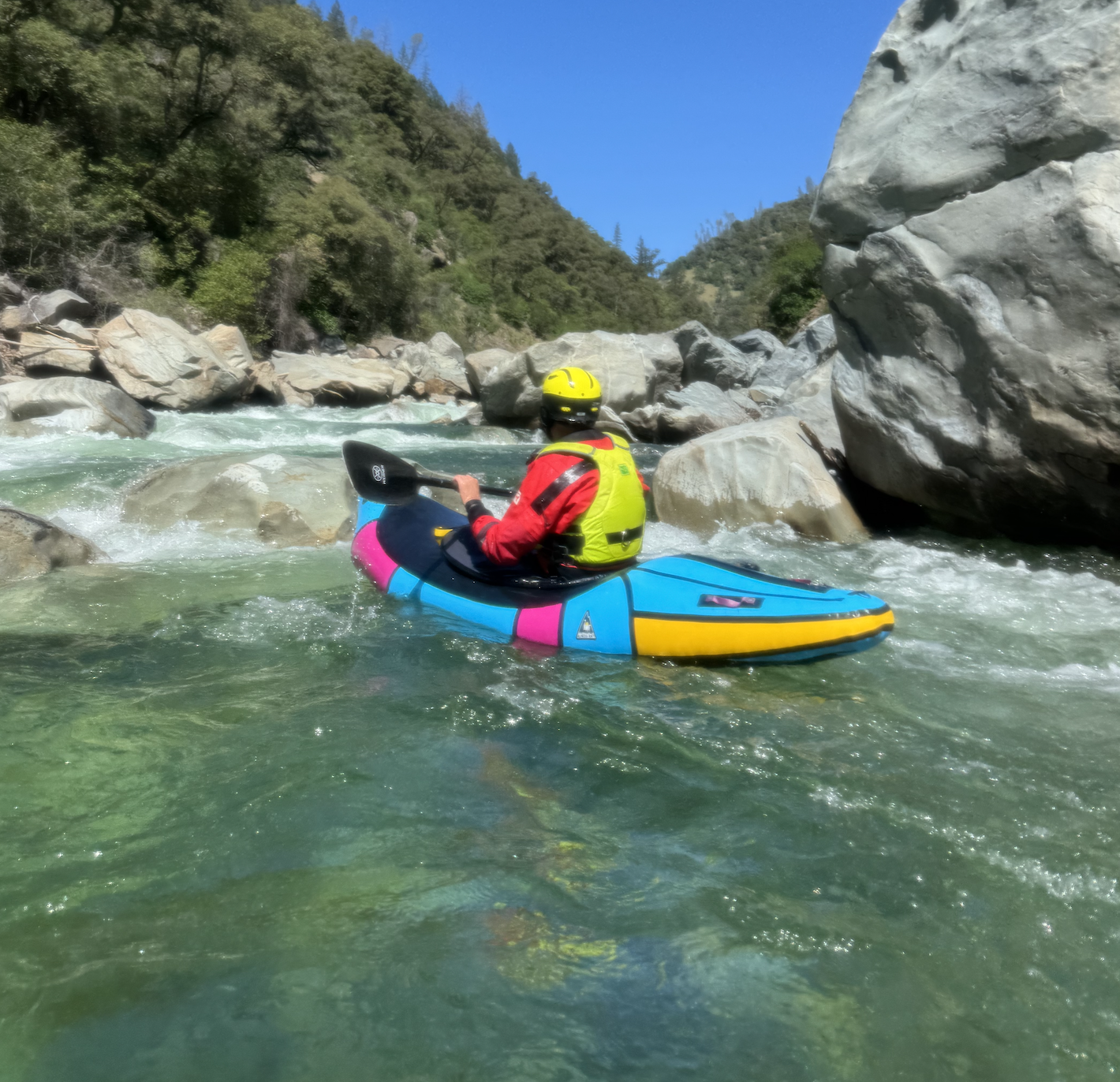
A packraft is an ultralight, highly packable inflatable raft — small enough to fit in a backpack, tough enough to run whitewater. Modern packrafts weigh as little as two to four pounds and pack down to roughly the size of a sleeping bag. You carry it into the backcountry on foot, inflate it at the water, paddle your section of river, deflate it, and keep moving.
The result is a style of adventure that simply wasn’t possible before packrafts existed — linking hiking trails with river corridors, accessing remote canyons, completing wilderness traverses that cross both land and water. It’s genuinely one of the most versatile tools in the outdoor world.
Who is packrafting for?
The short answer is — a lot of people. Here’s how packrafting tends to enter different people’s lives:
Hikers and backpackers discover packrafting when they realize a river crossing or water section is blocking access to the wilderness they want to explore. A packraft turns an obstacle into a highlight. Many backpackers who add packrafting to their toolkit describe it as the single biggest upgrade to their adventure capabilities.
Kayakers find packrafting appealing because it opens up rivers that are too remote or inaccessible for a hard-shell kayak. You hike in with your boat on your back, run the river, and hike out. No shuttle logistics, no road access required. Packrafts also handle differently than hard-shell kayaks — they’re more forgiving, more playful, and surprisingly capable in technical whitewater.
Adventure racers have embraced packrafting as a discipline in its own right. Many multi-sport adventure races now include packrafting legs — the ability to move efficiently on both land and water is a genuine competitive advantage. If you’re training for adventure racing, packrafting is a skill worth developing sooner rather than later.
Complete beginners with no paddling background at all find packrafting surprisingly accessible. The boats are stable, forgiving, and designed to be used by people who are learning. A packrafting clinic is often a faster path to river confidence than traditional kayaking instruction for people who are drawn to the backcountry angle of the sport.
The Gear
The packraft
Alpacka Raft is the gold standard in packrafts — they pioneered the modern packraft and their boats remain the benchmark for quality, durability, and performance. Alpacka makes packrafts for every use case from mellow float trips to Class V whitewater, in configurations with and without a spray deck. If you’re serious about getting into packrafting, an Alpacka is the investment worth making. Their boats last for years of hard use and hold their value well in the used market.
At CWC we run Alpacka packrafts for all our clinics and trips — we’ve tested them on California rivers, Chilean Patagonia, and everything in between. They’re the real deal.
Self-bailing vs. skirted packrafts — what’s the difference?
When you start shopping for packrafts you’ll quickly encounter two main configurations — self-bailing and skirted (also called decked). Understanding the difference helps you choose the right boat for how you want to paddle.
A self-bailing packraft has a perforated floor that allows water to drain out of the boat automatically. This means you don’t need to worry about the boat filling up in big water — it sheds water as fast as it comes in. Self-bailers are popular for high-volume whitewater, splashy rivers, and situations where you expect to be in and out of the water frequently. The tradeoff is that your lower body gets wet since there’s no sealed deck keeping water out.
A skirted packraft has a spray deck — a sealed cover over the cockpit that keeps water out of the boat entirely, similar to a sprayskirt on a kayak. Skirted packrafts are more versatile in cold water and technical whitewater because they keep you drier and give you more control in challenging conditions. They also allow you to roll the boat — an advanced skill that opens up more technical river running. Most serious whitewater packrafters run skirted boats.
For beginners on California rivers like the South Fork, a skirted packraft with a spray deck is our recommendation — it keeps you warmer in spring conditions and gives you more options as your skills progress. Alpacka makes excellent versions of both configurations, and our instructors can help you figure out which setup makes the most sense for your goals.
Paddle
A packrafting paddle needs to break down small enough to strap to your pack without being awkward on the trail. A four-piece breakdown paddle is the standard — look for something lightweight in carbon or fiberglass that won’t fatigue you on a long day. Werner Paddles makes excellent breakdown options that perform on the water without being a burden on the trail.
PFD
Same rules as kayaking — a whitewater-specific PFD is non-negotiable on moving water. Kokatat’s whitewater PFDs are our recommendation — low profile enough to move freely, rated for the water you’re running. A packrafting-specific PFD with minimal bulk is ideal since you’ll be wearing it while hiking too.
Drytop or drysuit
Water temperature matters as much in packrafting as it does in kayaking. On cold California rivers in spring — or on Patagonian rivers year round — a Kokatat drytop or drysuit is the right call. Their Gore-Tex construction keeps you genuinely dry and their packrafting-specific cuts allow the range of motion you need for paddling and hiking both.
Sprayskirt
For whitewater packrafting a packraft-specific spray deck keeps water out of the boat in bigger rapids. Immersion Research makes quality spray decks that seal reliably and release cleanly — important when you’re swimming in a remote canyon far from the nearest road.
Footwear
Packrafting footwear needs to work on both trail and river — grippy enough for hiking, secured enough for swimming. Neoprene booties over trail runners is a common combination for cold water. In warmer conditions sturdy water shoes with a back strap work well.
Where can you packraft in California?
California has exceptional packrafting terrain — remote Sierra Nevada canyons, coastal rivers, and of course the South Fork American River which makes an excellent learning ground for new packrafters. The South Fork’s pool-drop character, consistent dam-regulated flows, and accessible location make it one of the best places in California to build packrafting skills.
Beyond California, CWC runs packrafting clinics and trips internationally — including in Chilean Patagonia where the combination of remote wilderness, world-class rivers, and spectacular scenery makes for some of the best packrafting on the planet.
How to get started
The fastest way to get into packrafting is to take a clinic with experienced instructors before you invest in your own gear. A guided first experience on appropriate water gives you the foundation to progress safely and helps you make informed decisions about what gear is right for your goals.
CWC offers whitewater packrafting instruction in California and on international trips throughout the year. Our clinics cover everything from inflation and basic strokes to reading whitewater and self-rescue — all the skills you need to paddle confidently in the backcountry.
Browse packrafting clinics → Click HERE!
River Classification → Learn More
Learn about our Chile packrafting trips → Click here for adventure